Showing posts with label Nonfiction. Show all posts

Thursday, January 19, 2023

Beautiful Writers


Blurb:

From the host of the Beautiful Writers Podcast comes a heartwarming, how-I-made-tale from a working writer you’ve never heard of, and inspiration and advice from the legends you love.
This book gives aspiring writers and seasoned literary veterans a look into the lives of iconic authors and answers the burning question, “How did they do it?!”
As a young writer in Los Angeles, Linda Sivertsen was hungry to be more like her literary idols. Fame and fortune seemed to happen so easily—and so fast—for them. But how exactly did these bestselling authors bust through all the obstacles and deliver, day after day, year after year, book after book?
When her questions remained unanswered by multiple how-to guides, despite how her writing career was now thriving, Linda decided to go straight to the source: her favorite storytellers across numerous genres. So, Linda co-created the Beautiful Writers Podcast, where she began interviewing authors for the secrets behind their careers—and, without realizing it, began building a platform of eager listeners who wanted to learn from their shared idols. With more than two million downloads, Linda’s podcast has since become a bright beacon of inspiration for writers at all stages of their journeys.
Now, in Beautiful Writers: A Journey of Big Dreams and Messy Manuscripts—with Tricks of the Trade from Bestselling Authors, Linda shares—and expands on—the best of advice and storytelling from the podcast and follow-up interviews with literary greats, including:

• Terry McMillan
• Cheryl Strayed
• Tom Hanks
• Van Jones
• Jenny Lawson
• Steven Pressfield
• Elizabeth Gilbert
• Anne Lamott
• Mary Karr
• Seth Godin
• Abby Wambach
• Martha Beck
• Marie Forleo
• Lee Child
• Patricia Cornwell
• Dean Koontz
• Maria Shriver
• Dr. Jane Goodall
• Sabaa Tahir
• Tomi Adeyemi
• Ann Patchett
• Dani Shapiro
• Danielle LaPorte
• Tosca Lee
• Joy Harjo
• Deepak Chopra

Wrapped around the page-turning, magical, and wonderfully relatable account of the highs and lows of her own career writing bestselling, award-winning books for herself and others, these stories from the trenches are packed with suspense, laugh-out-loud humor, and raw honesty. Their passion and wisdom will help aspiring writers avoid common pitfalls and energize career authors with a treasure trove of writing insights from their peers.
Beautiful Writers is a love letter to reading, writing, and to everyone who reads and writes. It’s the book Linda wished she had when she was starting out. Beautiful Writers will become the evergreen companion for creatives everywhere. Write on!

Thoughts:

'Beautiful Writers' is Sivertsen's memoir on writing. While her stories are entertaining and hilarious, they are also compassionate and insightful. The book also has advice from many writers in it. She has managed to intersperse that with some major events in the beginning of her writing career..
Sivertsen discusses a wide range of problems/questions you may face when you write. She describes how much hard work goes into bringing out a book—from conception to writing to editing to publishing to marketing.
You may not like Sivertsen's lifestyle or her writing method/process. For example, you may balk at praying for inspiration or consulting a guru. You may not appreciate her attitude towards some authors. You may not agree with some of the people she has quoted. You may not find definitive information on how to plan, write, or develop a plot.
However, whatever stage you are in your career—beginner, established writer—you will find some part of the book that speaks to you. Similarly, whichever page you turn to, you will find practical, relevant advice about some aspect of writing.

Tuesday, January 3, 2023

Why I Write

Blurb:

One of the greatest raconteurs of the 20th century, Saadat Hasan Manto declares that he was forced to write when his wife routinely demanded that he put bread on the table for the family. He doesn’t attribute any genius to his skills as a writer and convinces his readers that the stories flowed even as he minded his daughters or tossed a salad. Equally, Manto treats his tryst with Bollywood with disdain and unmasks the cardboard lives of tinsel town when a horse is painted to double up for a zebra or multiple fans rotate to create a deluge. Two of Manto’s favourite and recurring themes — Women and Partition—find special mention.
For the first time ever, this unique collection of non-fiction writing from the subcontinent’s greatest writer, translated by well-known author and journalist, Aakar Patel showcases Saadat Hasan Manto’s brilliance while dealing with life’s most mundane things — graveyards, bumming cigarettes, a film crew with motley characters from mythology — and a sharp dissection of what ails the subcontinent even after six decades —Hindi or Urdu, vile politicians and the hopelessness of living under the shadow of fear.

Thoughts:

Title: The answer to the book's name 'Why I write' is in the following paragraphs:
  • "Truth be told, I promise you I’ve no clue how is it that I write. When I’m at a loss for ideas, my wife, who manages our finances, says sternly: ‘Please stop thinking and begin writing.’ And so I pick up the pen and start scratching out a few lines. My mind is still empty — but by now, my pocket is full. And of its own, as if by magic, a ripe story pops out. In that sense, I don’t consider myself a writer so much as a pickpocket. One who picks his own pocket and hands over its contents to you."
  • "The most important reason is that I’m addicted to writing, just as I am to drinking. When I don’t write, it feels like I’m unclothed, like I haven’t had a bath. Like I haven’t had my first drink."
Content: This book tells you about Saadat Hasan Manto's thoughts on various subjects ranging from politics, and religious fundamentalism, to feminism and women's place in society, to marriage, and modernization.
Some of Manto's essays also talk about the effect of India's Partition on both sides of the border. His special fondness for Bombay is reflected in his descriptions of how it was before and after Partition.
I don't know if this is true or if it is a mere coincidence because of the essays included, but Manto's two favourite topics seem to be Bombay and Bollywood. The book has a long essay on Bollywood and how it can express the spirit of the newly independent India. However, he seems disappointed by the lack of artistic integrity and the increasing mediocrity in the industry.

Writing: Manto's style, albeit sarcastic, irreverent, and sometimes dark, is entertaining in that he simplifies even the most serious subjects. Not all of Manto's opinions may be palatable to you but his wit may sustain your interest. Much of what he said, especially about religion and politics, is true even after so many decades.

Translation: I am unable to comment on this as I have not read any of Manto's original works. The book seems well-translated. However, it has many untranslated Urdu portions, which might pose a problem for those who don't know that language.

Overall, a good collection of essays that reveal Manto—the man and the writer.

Saturday, November 26, 2022

2-Minute Pep Talks


Blurb:

Feel Full of Hope, Love, and Comfort in Just 2 Minutes a Day
Imagine waking up every morning, feeling comfortable in your skin. Imagine loving yourself enough to ask life for no less than what you truly want. Imagine refusing to quit — and tackling every day with the endless optimism most adults believe is reserved only for children.
What if you could begin every day fully believing you are ready to take on the world? Better yet, what if it only took 2 minutes to start your day like that? That's what 2-Minute Pep Talks is for.
In this collection of 67 jolts of inspiration, celebrated writer Niklas Göke shares some of his favorite pieces, reworked ideas, and never-before-seen material, all to help you handle life's increasing complexity with grace, enthusiasm, and compassion.
You'll learn...
· Why our missteps are sometimes our best ones
· How to work with your brain rather than against it
· Why perseverance is more than just stubbornness
· How to express yourself more honestly
· Why you don't need more friends
· How to stop flinching when the phone rings
· What to do when you don't feel valued
...and a lot more! With more than two months of daily inspiration across five categories, 2-Minute Pep Talks will be your daily pick-me-up, a new perspective providing additional fuel to accomplish your dreams.
Whether you're looking for the silver lining in a world that seems to get messier by the day, novel ideas to stretch your brain, or that extra spring in your step — if you’re ready to regain that light, energetic, hopeful feeling we all used to possess as children, this book is for you.

Thoughts:

I knew of Göke from his Four Minute Books newsletter. So, I was quite interested in reading his books. To my utter surprise and delight, he very kindly sent me a copy of 2-Minute Pep Talks.
It has so many interesting stories/ideas/concepts. I have come across many of them elsewhere. Then what makes this book worth reading?
Well, I read many self-help books, some of which seemed patronizing, critical, and ableist to me. 2-Minute Pep Talks is certainly not one of them.
Göke's writing comes across as thoughtful, warm, and concerned about your life. It is simple yet soothing and conversational but insightful.
The book is laid out in short sections, which means that even people with a limited attention span can enjoy it. You can read the whole book from the front to the back (which is what I did) in one go or start anywhere and read one or two chapters at a time.
No matter what you do, the book has uplifting content that motivates you. It also has a practical side to it as it gives you actionable advice, tools, and resources to follow it up.
To sum up, a good, well-intentioned, easily digestible book.

The following are some of my notes/highlights from it. Some are verbatim, and some are paraphrased or rewritten. If any of these make you curious or resonate with you, do read the book.
  • A $100 bill is still worth its full value no matter how crumpled it is.
  • The story of Buddha and the muddy water.
  • The story behind the funding of one of the longest-running children’s TV shows of all time, Mister Rogers’ Neighborhood.
  • Charles Proteus Steinmetz sending an invoice for $10,000 to Henry Ford.
  • Time billionaires are far wealthier than their older, financially richer peers.
  • Whenever you can, choose to get paid to learn instead of idling to earn.
  • Be a “jack of all trades, master of junctions.”
  • Don’t 80/20 Your Dream: If you use the 80/ 20 rule on everything, you’ll live an unsatisfying life.
  • Sharing your art is a privilege. An act of service. The honors should be attached to your name, and so should the fallout. That’s how you learn. (Apropos outsourcing/ghostwriting)
  • Relationships are like trains.
  • “Just” is the most dangerous word in the English language.
  • “Jab sab galat ho raha ho, tab sab sahi ho raha hai.” When everything goes wrong, perhaps it’s setting itself right.” (Pleasantly surprised to see a Hindi saying in the book!)
  • The Chapter 'The Isms That Ruin Your Judgement' – the whole chapter, especially in today's world.
  • The French scientist Pierre Fouquet's categorization of alcoholism.
  • Your phone should be like your toothbrush.
  • If you can’t beat the fear, just do it scared.
  • The story of four monks who decided to meditate in silence.
  • A magnificent contradiction: Someone will save you today. …However, when it comes to the big things in life, no one will come and save you. You must be your own light. No one will make you rich, happy, healthy, or fulfilled. Those torches only you can carry. At the same time, you are constantly being saved.
  • You can still forgive yourself — one more time.
  • If you’re not valued, you’re in the wrong place.
  • It’s never too late to try something new. Don’t let anyone tell you otherwise.
  • You can do anything. Don’t forget.
  • Life is about taking chances.
  • One thought. One thought can change everything.
  • Now would be a great time to give up. But what if you don’t?
  • Tomorrow can be a good day.
  • You are the one we need.

Monday, November 14, 2022

365 Ways to Have a Good Day


Blurb:

SET YOUR MINDSET FOR SUCCESS
How are the next twelve months looking for you? Pretty much the same as last year? Or are you ready to make things interesting?

365 WAYS TO HAVE A GOOD DAY is a full year's worth of daily inspiration, tools, habits, actions and rituals that will set you on the path to personal success. You'll encounter surprising insights and odd experiments from the world of cutting-edge psychology. You'll discover the benefits of Feierabends and Laughies, have your eyes opened by a dance psychologist, and learn why one senior executive's tattooed fingers help him make the right career choices. You'll find stories to inspire you to even greater achievements, pick up habit-forming strategies from unexpected sources, get prompts to help you put ideas into action, explore brain hacks and uncover tips for lasting behavior change.

You'll meet a cast of characters from around the world who know all about creating success, from the founder of a billion-dollar mindfulness company in California to the Hollywood screenwriter who takes up to eight showers a day to fuel his ideas, and from the Harvard Business School professor who discovered more joy at work by wearing red trainers to the man who every Friday for five years set up a table in central NYC to give advice to strangers, including a gang member on the run.

365 WAYS TO HAVE A GOOD DAY focuses on the small stuff you can do every day to make life better. Because when you get the little things right, the big things follow. Things like figuring out where you're going, hitting reset, designing the life you want, breaking through limiting beliefs, and creating success on your own terms. And when you find what works for you, you can do more of it, making you more productive, more fulfilled, and much happier.

Use this book to help you seize the day - all 365 of them. The next twelve months could be the best days of your life.

Thoughts:

In this book, Ian Sanders gives you 365 actionable tips in clear, concise language. Aimed at making your day better, they range from being extremely specific to wild and fantastic. Some of them fall under familiar categories, such as personal development, but some other concepts, such as susegad, feierabend, keyifli, arbejdsglaede, fernweh, sobremesas, and fikabreak may be new to you.

The tips may not all be relevant to you. However, you will be able to understand the essence of what Sanders is trying to convey and customize them to suit your situation.

Being an incurable optimist, I believe that we can try to make any day a good day even when things seem hopelessly out of our control. I believe that reflecting upon your circumstances and changing your perspective can bring about major changes in your life. So, I like the book's premise.

Sanders weaves in anecdotes of his experiences engagingly to expound it. He mentions many interesting people, books, and other resources, which I intend to explore later.

I read it in one go. The chapters have numbers and not dates, which means you can start reading it any day. You can refer to a tip or two as and when needed.

Overall, an enjoyable book that has practical and unique tips for improving your life. It does exactly what the blurb says. It delivers on all accounts.

Note:

NetGalley provided me with an ARC in exchange for an honest review.

Friday, November 4, 2022

Hell in High Heels

Blurb:

Addressing women in history with a unique perspective and a bit of flair!
History textbooks haven’t changed in at least thirty years. Imagine the author's disappointment when she realized her children were learning the same misinformation she did in K-12. Where the fuck were the women who refused to conform? Who refused to live under a man’s boot? The villains? The criminals? Did they not exist?
A handful of badass women are mentioned, usually in passing, in mainstream history books as a sort of appeasement for the feminist crowd—Sojourner Truth, Harriet Tubman, Cleopatra, Catherine the Great, et cetera, et cetera—but the author, a feminist, was not appeased. Or amused.
You won’t recognize many of the names here, if any, but there are some familiar names who merit a more honest accounting than they’ve been given. These are women who broke the law; who committed murder; who stole; who got a bad rap; who defied convention; who were so fucking fierce in their own time that contemporary historians exaggerated their villainy.
You ought to meet these badass—and sometimes really fucking scary—bitches. Some will make you cheer; some will make you laugh; and some will make you say, “Holy fuck! I hope that bitch is burning in Hell!"

Thoughts:

The book's title and its sardonic disclaimer at the beginning caught my interest. I started off by laughing at most things C.H. Burford had written because I thought it was quite a refreshing take on historical infamous figures.

I quite liked the gritty, sarcastic, edgy treatment Burford has given them. She seems to have worked hard in terms of the sheer volume of in-depth research that has gone into the book.

I believe that women, whether their contributions are positive or negative, are an integral part of history. They should not be confined to just bare mentions or be portrayed as sidekicks or supporting actors. They also need not be painted as virtuous or villainous to suit the so-called normal/moral standards of society.

However, my enthusiasm started waning as I reached about a quarter of the book. Repetitive swear words, asides, and descriptions made the writing predictable.

Profanity: I don't use swear words but I am no prude. I am interested in etymology, and I respect all words because all of them were coined for some purpose and used so. I found the use of most swear words in the book purposeless.

Characters: In all anthologies, I look for the basic theme. Burford says: "So here I´ve gathered for you a collection of women who most of the world don't know existed. (...) These are women who broke the law, who committed murder, who stole, who got a bad rap, who defied convention, who were so fucking fierce in their own time that contemporary historians exaggerated their villainy. I think you ought to meet these badass - and sometimes really fucking scary – bitches."
Again, I am all for highlighting the feats of strong, fierce women but after a while, I started wondering whether she wanted to show that women can be as cruel/violent/terrifying as men or more so!

Asides and strange descriptions: I could overlook even the swear words but the asides - the frequent explanations or descriptions in parentheses - were unbearable. Were they meant to be funny, snarky, or cheeky? They were so irritating!

To sum up, this book is a missed opportunity. Had Burford excluded the profanity and the asides, it could have been an excellent reference book.

Note:

BookSirens provided me with an advanced review copy in exchange for an honest review.

Wednesday, October 12, 2022

A Writer's Life: The Margaret Laurence Lectures

Blurb:

For anyone who loves great literature -- or aspires to write it -- this is an essential collection, full of insight, wisdom, humour, and candour from Canada's most important and beloved literary figures.
For the past twenty-five years, the Writers' Trust of Canada's annual lecture series, the Margaret Laurence Memorial Lecture, has invited some of Canada's most prominent authors to discuss the theme of "A Writer's Life" in front of their peers. Hugh MacLennan, Mavis Gallant, Timothy Findley, W.O. Mitchell, Pierre Berton, P.K. Page, Dorothy Livesay, Alistair MacLeod, and Margaret Atwood, among others, have shared the personal challenges they faced in forging their own paths as writers, at a time when such a career was still unusual in this country. 
Intimate, frank, and revealing in tone, their lectures -- collected for the first time in celebration of the series' twenty-fifth anniversary -- provide a unique account of a period when a national writing community was just being formed, and give us unprecedented access to the heroes and heroines of Canadian literature as they share their insights into their work, the profession of writing, the growing canon of our literature, and the cultural history of our country.

Thoughts:

I had never given a thought to Canadian writers until I found the website Canadian Poetry Online. Until then, I had viewed poems by them and American writers as one category.
When I posted her poem on my blog, the Canadian poet Karen Shenfield commented on it. She mentioned her colleagues in that comment. Ever since I have tried to learn more about the writers in Canada.
I started reading about writers' lives this year because I wanted to improve my writing schedule. I did not deliberately choose A Writer’s Life: The Margaret Laurence Lectures. I came to know of this anthology during my search for books about writers.
It contains the experiences and insights of many Canadian writers. While some have stayed strictly on topic, some have veered off tangent. However, every one of them has something relevant to say.
Some have talked a lot about Canadian history. In those parts, my interest flagged and my reading slowed down. However, I liked the book and will read it again in the future.

Background information:

The Writers' Trust of Canada, founded in 1976 by five notable Canadian authors - Margaret Atwood, Pierre Berton, Graeme Gibson, Margaret Laurence, and David Young – supports the writing community in Canada.
Pierre Berton proposed creating a lecture series to have Canadian writers contemplate their lives and share insights about their work and their community. Accordingly, since 1987, the Trust has commissioned a senior Canadian author to deliver a lecture on the topic "A Writer's Life."
Named in honour of Margaret Laurence, one of Canada's most esteemed and beloved authors, the lectures are presented at the Writers' Union of Canada's Annual General Meeting.
This anthology was published by McClelland & Stewart on the occasion of the 25th anniversary of the lecture series.

Sunday, August 28, 2022

Threads of Awakening

Blurb:

What if you set out to travel the world and got sidetracked in a Himalayan sewing workshop? What if that sidetrack turned out to be your life's path--your way home?
Part art book, part memoir, part spiritual travelogue, Threads of Awakening is a delightful and inspiring blend of adventure and introspection. Leslie Rinchen-Wongmo shares her experience as a California woman traveling to the seat of the Tibetan government-in-exile in India to manage an economic development fund, only to wind up sewing pictures of Buddha instead. Through her remarkable journey, she discovered that a path is made by walking it--and that some of the best paths are made by walking off course.
For over 500 years, Tibetans have been creating sacred images from pieces of silk. Much rarer than paintings and sculptures, these stitched fabric thangkas are among Tibet's finest artworks. Leslie studied this little-known textile art with two of its brightest living masters and let herself discover where curiosity and devotion can lead. In this book, she reveals the unique stitches of an ancient needlework tradition, introduces the Buddhist deities it depicts, and shares insights into the compassion, interdependence, and possibility they embody.
 
Thoughts:

A travelogue/memoir, this turned out to be an informative as well as an enjoyable read. Rinchen-Wongmo describes her journey to learn the art of Tibetan fabric thangkas. Her interest in it began on a visit to Dharamsala, India, the seat of the Tibetan government-in-exile.
Although the book is largely on this rare textile art, it has a lot of Buddhist philosophy and ritual practices. This is natural as the art form usually depicts a Buddhist deity, scene, or mandala. Rinchen-Wongmo explains it all in a simple, interesting manner.
I liked its structure. Like the fabric thangkas the author creates, 58 chapters are each labelled a 'piece'. They are grouped into seven parts with titles, such as fibers, threads, warp, weft, etc. It makes for a nice flow that weaves her experiences into a unique story.
Rinchen-Wongmo has managed to include the basics of geography and history necessary to make the audience aware of the significance of the subject matter. A detailed appendix about the process of making thangkas is given at the end of the book. There is also a glossary of words with Tibetan, Sanskrit, and Hindi origins.
Given that the content mainly refers to Tibetan sacred icons it must have been difficult to maintain a fine balance between being respectful and engaging. Her writing style is both.
I would recommend it to anyone interested in textile art, crafts, Buddhism, and accounts of people pursuing lives off the beaten path.

Note: BookSirens gave me a free copy of this book in exchange for an honest review.

Thursday, July 21, 2022

How to read a book


Blurb:

An award-winning novelist reveals the books that have captivated her and the influence they have had on her life and writing. Highlighting a true love affair with books, this story emphasizes the transformative power of the written word.

Thoughts:

I wanted to get a less serious (or maybe a writer’s) perspective of how to read a book to balance Mortimer Adler’s book of the same name that I am reading.

However, this book is certainly not about ‘how to read a book’. It is about the reading and writing experiences of Kelly Ana Morey.

Reading it felt like being in a one-sided conversation with a learned writer friend who had definitive opinions on literature and books. Boy, did she have interesting things to say! Here is a sample.

I liked the book because it is informal, funny, and most importantly, realistic about everything. For example, the last two sections were a reading diary and a list of 100 good books. The diary shows how often Morey abandons books in favour of more interesting reads, even magazines.

More a memoir than a how-to book, this may not be for everyone.

Saturday, July 16, 2022

Finding Karen Black

Blurb:

Finding Karen Black takes you into the heart of the adoption experience with a celebrity twist.
In 1959, Karen Black gave up a newborn daughter for adoption. While Karen pursued a career in acting that took her from New York to Hollywood, her child Diane Bay grew up in a suburban neighborhood near Chicago. For five decades they knew nothing about each other. Then Illinois opened their sealed adoption records, and Diane sent for her original birth certificate. That same spring, battling cancer, Karen searched for her long-lost daughter.
When she received her records, Diane was amazed to discover that her birth mother was the actress whose unconventional beauty had captured the zeitgeist of the ’60s and ’70s cinema. Karen had starred in some of the decades’ prominent films including Easy Rider, Five Easy Pieces, Airport 1975, and more. Diane messaged Karen on Facebook, and Karen responded with joyful acceptance. Their reunion was healing but bittersweet, because it came at a pivotal moment: they had exactly one year to deepen their mother-daughter bond before Karen lost her battle with cancer.
Finding Karen Black: Roots Become Wings is a memoir that takes the reader on an emotional journey from childhood longing to dream fulfilled, and from the first moments of a joyful reunion through a year of discovery, loss, and renewal. This remarkable story is a testament to the power of the mother-child bond, the importance of our biological roots, and the belief that love lasts forever.

Thoughts:

I didn’t know anything about Karen Black. When I saw her photo, she seemed familiar. I assume I must have seen her in some film. So, I started reading the book with an open mind, really unaware of anything else except what the blurb said.
I was slightly disappointed. I felt that it touched only the surface of what actually happened between Bay and Black.
It dragged in many places. It isn’t right that I comment on the book’s content but in those places, it seemed as though Bay was trying to ‘fill in the silences’ with her impressions or even imagination. Maybe a better, tighter edit would have helped?
That being said, I liked the book as a whole. People who know Karen Black may probably find it far more interesting than I did.

Note: I received a free copy of this book from BookSirens in exchange for an honest review.

Tuesday, July 5, 2022

From the Flood

Blurb:

It’s the summer of 1972, when six-year-old Suzanne Jones and her siblings are whisked away from their home in the middle of the night, never to return again. Hurricane Agnes has triggered a devastating flood that destroys the family home and business. Suzie and her family are then set on an exhausting yet exhilarating four-year journey to build back their lives.
Suzie bounces from one quirky family member to the next before she and her family settle into a government-provided trailer for the next two years. When Suzie and her family meet a community of kids and their free-thinking parents living in the other trailers, their lives are changed forever.
This tale of loss, love, and discovery, told through the eyes of a child, is at times laugh-out-loud funny and at others deeply poignant. Chock-full of 1970s nostalgia, Suzie’s story is a delightful trip down memory lane for those who lived through the decade and a vibrant illustration of life in the ’70s for those who did not.
From the Flood teaches us that even the most difficult life circumstances provide unexpected gifts.

Thoughts:

The book is about the author's experience during Hurricane Agnes and the ensuing flood that destroyed everything. It also tells you about the years after it when her family and community had to slowly rebuild it all.
Jones describes the fear everyone experienced during the hurricane and the excitement of the new lives they were creating for themselves from a child's perspective. That she can remember so much from that time reveals the extent of the impact the flood had on her life. Despite being from a child’s point of view, the chronology and descriptions of the events are quite clear.
The book is enjoyable because Jones’ childhood is interesting and unusual. She writes with dry self-deprecating humour, whether it be about her father’s stoic persistence, her mother’s emerging interest in feminism, or the idiosyncrasies of her family and friends.
Jones and the group of children around her witness glimpses of serious issues, such as the women's liberation movement, homosexuality, teenage pregnancy, and domestic violence. They do not understand much of these; their reactions to them are delightfully innocent!
Although From the Flood is a memoir written in a child’s voice, it is anything but childish. It is a charming book about what must have been a chaotic period, devoid of any melodrama or verbose descriptions. 

Note: I received an advance review copy from BookSirens in exchange for an honest review.

Wednesday, June 22, 2022

The Backpack Years

Blurb:
Part travel, part romance, part failing at life, The Backpack Years intertwines two memoirs, charting Stef and James’s six-year journey from happily wandering to miserably settled and back again.
Straight-laced Stef left America to study abroad in Spain, letting loose and falling head over heels for two things: a handsome local and travel. Travel won out. James had a future in England he felt he’d already destroyed. Fueled by debt and a deteriorating relationship with his father, James fled to Australia and found something better.
After language mishaps in France and a topless night in Tenerife, an awful offal job in Warrnambool and a kidnapped manicure in Bali, Stef and James meet at an Irish pub in Sydney. Though their adventures are pulling them in different directions, they ditch the single life to forge a path together.
Can the two navigate their way through red-tape, relocation, miscommunication, and a last ditch, make-or-break trip to try to save their relationship, or will this be their last adventure as a couple?
Spanning thirteen countries and four continents, The Backpack Years is a story about how far we’re willing to go to be with the one we love.

Thoughts:

Exactly as the blurb says, the book contains the memoirs of Stef and James—their separate perspectives on travel, romance, and life—that blend into one story.
It starts in 2000, spanning their travel through thirteen countries and four continents. Initially, they travel solo but meet a third of the way through the book. They change their plans so that they can travel and stay together.
This leads to a whirlwind marriage and many obstacles that prevent them from traveling for some time. When their relationship is threatened, they seek to remedy it with another trip.
Although the book has been co-written by two people with different viewpoints, it is easy to read because the change of narrator is clear. The writing is vivid, engaging, and immersive.
The authors have written quite candidly about their lives. They are honest about the great and not-so-great parts of their relationship and lifestyle. World travel, especially as backpackers, can involve budgetary restraints, illnesses, and dangers related to regional issues.
When I started reading it, the descriptions of their conditions—lack of money; sparse hygiene; abundance of sex, alcohol, and drugs; troubles with work/visa/permits; and adjusting to cultural differences—appalled me.
However, Stef and James managed to handle all that because they were resilient and had ample support from the great friends they made along the way. The Backpack Years shows how far Stef and James were willing to go to save their relationship and follow their dreams.
It is a balanced account of how challenging and rewarding travel and making a relationship work can be. Despite my initial misgivings, I found it enjoyable.
Note: I received an advance review copy from BookSirens in exchange for an honest review.

Saturday, June 11, 2022

Mountain Song

Blurb:

In the vein of Nan Shepherd's The Living Mountain and Mary Oliver's gentle writing on nature, Mountain Song is a love letter to adventure, slowing down, and quietly noticing the beauty of wild places and our place within them.
"Here in the silence and surrounded by mountains, I’m starting to find my answers, at least for now. I want to be moulded by the world: by the people I’ve loved and the places I’ve sat and listened quietly, watching leaves falling, the sun rising and stars appearing..."
After graduating university with no idea what she really wanted to do with her life, Lucy Fuggle made the unexpected decision to leave behind her home in the UK for the company of glacier-covered mountains, alpine flora and fauna, and soaring eagles in Switzerland's Berner Oberland. For three years, she made picture-perfect Meiringen her home.
Growing up painfully shy and with high-functioning autism, Lucy found new mental and physical courage in the natural world around her traditional Swiss chalet, living alone with a view of towering peaks and waterfalls. In summer, she explored every trail around her house, including the Via Alpina trail 400 km across Switzerland. The coldest time of the year saw her switch hiking for freezing lake swims, snowshoe hikes, and glacier treks.
As her relationships, career, and inner life changed – for better and for worse – she ventured further into the wild around her for comfort, answers, and acceptance. In the silence and loneliness, she found the space to step into who she really was, no matter what others thought of that.
This is her quietly inspiring and soothing story of the ups and downs of living simply, quietly and in tune with nature and the transformation it can bring, accompanied by beautiful photographs and pen and ink sketches. Surrounded by some of the most striking scenery in Europe, Lucy finds a slower pace of living and exchanges insecurity for courage, changing the course of her life beyond recognition.

Thoughts:

I am a great fan of structure, order, and logic. When I started reading this book, I was disappointed because it read like a journal or a diary of disjointed and non-chronological entries. However, as I moved further along, I realized that the style suited the content.
Fuggle writes about how successfully handled the problems that plagued her. I like stories of second chances and rebuilding lives.
The geography and the climate of the Swiss Alps are so different from my part of the world that the setting felt dreamlike. I can never imagine climbing mountains or hiking through them, but I loved reading her descriptions of them.
With my head in the clouds and snow of the Alps, I was able to ignore most of the troubles I had when I was reading the book. It comforted me because I could relate to some of the different mindsets Fuggle went through while writing it.
The book has many quotes and poems, which are listed at the end. It also has great photographs taken by her.
It is an easy and relaxing book, written well.

Note: I received an advance review copy for free from BookSirens in exchange for an honest review.

Monday, May 9, 2022

Creating Clarity & Connection


Blurb:

Reimagine Your Life in a Positive and Purposeful Way.

Creating Clarity & Connection provides life-affirming practices to bring meaning to your self-discovery journey. Whether you are just starting, restarting, or reviving your efforts to reconsider your life, you can:
  • Rediscover the things that make you happy,
  • Reclaim your sense of wholeness,
  • Reframe your life with a sense of purpose and perspective,
  • Remake your life in a positive and purposeful way.
Creating Clarity & Connection provides direction to begin pursuing your best life, the life you know is waiting for you. No getting lost, sidetracked, or hijacked.

The self-guided journal pages offer guidance to help you understand:

Where to start?
  • Happiness. Happiness is the key to shifting your perspective. Learn how to use Happiness Habits to infuse your life with simple moments that make you happy.
  • Start with the end in mind. Before you begin your journey, develop the insight and clarity you need to define what you truly want for your life.
  • Create an internal compass, a compass of your heart, to guide you as you navigate life in the direction of your dreams.
  • Define the directions in life that are most important to you. The directions hold the key to your wellbeing and connect you with your unique talents and gifts.
How to make lasting forward progress?
  • Notice and become aware of life around you. Deliberately and intentionally break free from existing intellectual routines. You can’t be open to what you can’t see.
  • Experience the value of stillness. Cultivate your ability to connect with your heart and listen to the still small voice within you. The ability to hear in the stillness takes practice.
  • Take action. Become deeply immersed and engaged in life by trying new things that will expand the realm of your experiences. These purposeful actions nurture your inherent curiosity., create intentions, and invite results.

Then what?
Let your life speak. By starting happy and starting small, you create the mindset and perceptive needed to work your way toward the life of your dreams. Your life will continue to unfold with each action you take.

How this approach was developed
The life-affirming practices outlined in Creating Clarity & Connection came from the experience of someone who was lost. Someone who thought, despite years of trying, she would never find meaning or contentment in life. Someone who lived in fear that she would die without having found her authentic self or lived a purposeful life. That someone is me.

I developed the self-guided journal pages as a way of capturing the process of what happened when I stopped judging and comparing and started noticing. How, when I summoned the courage to be curious, when I took direct and purposeful action in my life, I was led to the place I need to be.

What makes this self-guided journal unique?
  • It’s all about you. It helps you unlock and understand the potential you already possess, helping you create your own way.
  • It’s filled with thought-provoking wayfinding quotes. The quotes help you stay focused on what is possible in life. They feed your dreams.
  • It is customizable. This is not a one-and-done solution. Rather, it is an approach you can use, refine, and redefine as you learn more about yourself and your life.
  • You can travel at a pace that works for you. There are no daily or weekly requirements or regimens to follow. Use the journal at a pace that works for you.

Start right here, right now to create the clarity to connect with your life.

Thoughts:

Positives:

This is an open-ended journal. You are meant to use it to tackle feelings of despair by being self-aware and true to yourself. The author Robin Shukle discusses daily occurrences or ‘crumbs’, which if you pay attention, would direct you in your journey to find meaning and happiness.

The book is easy to read and has many quotes. It also comes with a list of resources and worksheets you can use in your transformational process.

Negatives:

This is from the blurb: “The life-affirming practices outlined in Creating Clarity & Connection came from the experience of someone who was lost. Someone who thought, despite years of trying, she would never find meaning or contentment in life. Someone who lived in fear that she would die without having found her authentic self or lived a purposeful life. That someone is me.”

However, nowhere in the book did I find what her personal/professional struggles were or why she felt stuck and wanted ‘more’.

Without personal anecdotes, the book seemed like a rambling account of things privy to the author and those close to her. I felt that the whole book could be condensed into one long blog post. I could not connect with the book, despite it having quite a few good points.

Note: I received an advance review copy from BookSirens in exchange for an honest review.

Saturday, April 23, 2022

Road to Mekong


Blurb:

For fifty-six days, four women left their ‘regular lives’, homes, families and comfort, to ride their motorbikes through scenic landscapes, inhospitable terrain and diverse regions. In this process, they covered 17,000 kilometres through six countries. What inspired them to follow this dangerous, and at times maddening, adventure trail?

In Road to Mekong, Piya Bahadur recounts her once-in-a-lifetime journey through Southeast Asia. With little prior experience in expeditions of this nature, the group successfully planned and executed an exhilarating trip from Hyderabad, through the east Indian coast and the northeast of India, weaving through Myanmar, Thailand, Laos and Vietnam, along the river Mekong, and finally to Cambodia. By the time they returned, the lives of these audacious women had changed forever.

Piya takes the reader along on her travels through places rarely visited by the itinerant Indian and shares the new world that unfolds as she journeys from being a working mother constrained by her own inhibitions to a confident traveller accepting of whatever adventures life has to offer.

Thoughts:

I bought the book because its cover and blurb seemed quite interesting. I wanted to know more about these four women who went on a bike ride through six countries covering 17,000 kilometres.

The journey was sometimes arduous because of the red tape involved and also because of the vagaries of the route. They were able to overcome everything because they were strong, courageous, and determined. The joy of experiencing new places and diverse cultures was enough compensation for them. They also had the support of a team that followed them in a bus. 

The book is a good choice for those who love travel, women empowerment, chasing dreams, and breaking norms. The descriptions are vivid, the narrative interesting, and the language, simple and apt. Bahadur has explained the process of planning and executing the long ride quite well.

However, you would be disappointed if you wish to know more about the camaraderie between the four women, the personal challenges they overcame, or the friendship they forged. Bahadur does not dwell too much on the personal or the human aspect, except if it was directly related to their trip.

You will understand more about why this is so and what they wanted to accomplish with this journey when you read the last two chapters.

Overall, a good book!

Wednesday, March 30, 2022

Chance Particulars


Blurb:
The goal of the writer is to live with the keenness of the foreigner. To experience, wide-eyed, the sensations aroused and the events offered up by a peculiar surround and then to evoke them so brightly on the page that the reader, too, experiences the foreigner's frisson. A time-honored way this is accomplished is through the keeping of a field notebook--through the faithful recording of the this and that of life; the atmospheres and incidents; the bells, the beer, the bread.
Based on what accomplished nonfiction writer Sara Mansfield Taber learned in her many years of field notebook keeping, Chance Particulars is a unique and handy primer for writers who want to use their experiences to tell a lively, satisfying story. Often, writers try to turn their notes into a memoir, essay, travel piece, or story, only to find that they haven't recorded enough of the concrete, sensory details necessary to create evocative description. To help writers overcome this problem, Taber has composed a true "field notebook for field notebook keepers." Enhanced by beautiful illustrations, this charming and comprehensive guide is a practical manual for anyone who wishes to learn or hone the crafts of writing, ethnography, or journalism.
Writers of all levels, genres, and ages, as well as teachers of writing, will appreciate this useful tool for learning how to record the details that build vibrant prose. With this book in hand, you will be able to recreate times and places, conjure up intricate character portraits, and paint pictures of particular landscapes, cultures, and locales.

Thoughts:
‘Chance Particulars’ examines how journaling and record-keeping enrich writing. It shows how you can mine information from experiences if you note their particulars down.
The book talks about how to be present, engage fully, and observe well so that you can share your experiences better. Taber tells you to focus on details while using all your senses. She asks you to document your observations descriptively.
If nothing else, you will have enough material to fall back upon when you sit in front of a blank page or the outline of an essay or story trying to fill it.
Although I read a digital version, I feel that I should read or buy a physical copy of this book to make full use of the prompts and the space for practice.
This is not a book that you read and complete. It is more of a guide that you may refer to repeatedly if you are serious about writing.
I loved the excerpts and quotations from other books that Taber has used to illustrate her ideas. They provide you with proof of how language informs, connects, inspires, and brings us joy.
Overall, a well-organized book, with great illustrations by the author’s daughter, Maud Taber-Thomas.

Thursday, March 17, 2022

Wild

Blurb:
At twenty-two, Cheryl Strayed thought she had lost everything. In the wake of her mother’s death, her family scattered and her own marriage was soon destroyed. Four years later, with nothing more to lose, she made the most impulsive decision of her life. With no experience or training, driven only by blind will, she would hike more than a thousand miles of the Pacific Crest Trail from the Mojave Desert through California and Oregon to Washington State — and she would do it alone.
Told with suspense and style, sparkling with warmth and humor, Wild powerfully captures the terrors and pleasures of one young woman forging ahead against all odds on a journey that maddened, strengthened, and ultimately healed her.

Thoughts:
I had read Torch and some essays by Strayed. I was looking forward to reading Wild.
In Wild, Strayed tells you how her life unravelled after her mother’s death. Her family scattered. She sabotaged her marriage to a man she loved. She started using heroin.
A loved parent’s loss is not uncommon. People deal with it all the time. However, she couldn’t accept the loss and went on a path of self-destruction. It is understandable—she was just 22.
She heard about the Pacific Crest Trail (PCT). She decided to backpack through it in the hope of healing herself. Her preparation was at best haphazard. She often comes across as idiotic, impulsive, and self-absorbed.
However, Wild is not a how-to book about backpacking, hiking or dealing with parental loss. This is the story of Strayed dealing with her grief and facing her demons.
I liked her writing. It is stark, frank, and unpretentious.
At 22, anchorless and unsettled, wandering off into the wild to find relief—I think this is part of the book’s charm. In time, she is able to accept certain things and let go of others. The hike through the PCT seemed to have served her purpose.

Thursday, February 17, 2022

Unbound

Blurb

‘The capability of the individual matters. Not the gender. As a woman you need to have the confidence that your gender cannot hold you back.’
—Meena Ganesh, former CEO of TESCO Hindustan Service Centre

How does an item girl tackle sexual harassment at her work place? Why does a highly paid woman software engineer pay a dowry? Breast pumps and BlackBerry phones … do they go together? When a woman focuses on her career, does she lose out as a wife and a mother? Is there a female model of achievement as distinct from a male one?
These and other similar questions are explored in Unbound: Indian Women @ Work through a series of interviews conducted by the author with women from all walks of life and from different parts of the country. Icons like Kiran Mazumdar Shaw, Chairman and Managing Director of Biocon Ltd, and Meena Ganesh, former CEO of TESCO Hindustan Service Centre, rub shoulders with Rachel the hair designer and Sumathi the call-centre employee who comes from a family of domestic helps. Women engineers discuss insidious gender discrimination and working mothers speak of the difficulties of balancing motherhood and work.
The stories in this book are of real women who spoke out candidly about their concerns—their families, their love lives and marriages, their victories and defeats. Together they provide a valuable guide to the brave new world of today’s women professionals.

Thoughts

Content

In an article she wrote in 2013, author and journalist Gita Aravamudan mentions this book’s genesis. After writing “Disappearing Daughters: the tragedy of female foeticide”, she wondered why women were so unwanted, despite being talented and able.
The reason, she found, was that they were perceived as economic burdens. She then had the idea of writing about women who generated wealth.
The result was Unbound: Indian Women @ Work, a book that presents a comprehensive overview of Indian working women who live in Tier-1 cities.
Aravamudan interviewed women between the ages of 25-50, one of the exceptions being a 97-year-old doctor. Most were middle-class women from the metros Delhi, Mumbai, Hyderabad, Bangalore, and Chennai.
They included journalists, doctors, entrepreneurs, teachers, salesgirls, beauticians, software engineers, item girls, chefs, and actors—ordinary women with great grit and grace.
Some were well-known, such as Biocon Ltd chairman and managing director Kiran Mazumdar Shaw; former CEO of Tesco Hindustan Service Centre Meena Ganesh; Radhika Bordia, NDTV journalist; VJ Sophie; and talk show hostess Lolakutty.
The stories of these women give you different perspectives across various fields, classes, social structures, and industries. They also shed light on some lesser-known conflicts, archaic laws, and legal impediments working women face.
Regardless of their work or wages, women have to contend with many common issues, such as family support, domestic commitment, marriage, dowry, bearing and rearing children, safety at work, and discrimination.
This book shows how women are achievers and wage earners, despite these innumerable impediments. It reveals the positive changes at workplaces and in society as well as the areas where progress is lacking.
Aravamudan’s extensive research also brings forth what she calls a ‘feminine pattern of achievement’, wherein people consider their domestic responsibilities and professional commitment equally important.

Writing

Although I had heard of Aravamudan and read some of her articles, I was not familiar with her books. I ordered this book under the impression that it was part of a series about Indian women called Unbound.
I realized I was wrong when I was reading Unbound by Annie Zaidi, the book I thought was the first in the series.
I do not regret buying hard copies of either. I am always interested in reading about Indian women pursuing careers. After all, I am one of them.
As Aravamudan mentions in this book’s preface, the unbinding of middle-class Indian women happened gradually. It went rather unnoticed until its impact reached far and wide. As a woman journalist who experienced it, she was able to document its impact skilfully.
The book could have been much better in structure and language had it been edited well. However, I appreciate the effort that went into its research.
It provides you with a lot of information and snags your interest with real-life stories. The writing style is simple and easy to comprehend. Yet, it reads like a long article or descriptive thesis.
Although it is repetitive at places, I didn’t mind it so much because I read it over a long period starting from last year.

Tuesday, February 8, 2022

Where The Tide Took Me

Blurb:

In this candid and emotionally compelling memoir, Paige Willoughby charts her journey from shy and fearful child to authentic and resilient woman.
She shares her painful experiences with binge-drinking and the collapse of a marriage, as well as living with diagnoses of anxiety, depression and trauma. Through it all, words and music allow her to overcome her fears and chart a course through the darkness to her true vocation.
A book that will resonate with anyone who has been buffeted by life’s challenges, Paige’s story exemplifies the power of uncovering and shaping one’s own narrative.

Thoughts:

I usually refrain from reading others’ reviews of books lest they influence my opinion. This is an instance where I rue the fact that I do so!
I chose this book because the blurb presents it as ‘candid and emotionally compelling’, ‘a book that will resonate with anyone who has been buffeted by life’s challenges’, and ‘exemplifies the power of uncovering and shaping one’s own narrative’.
I am sorry to say I did not feel any of these. As the saying goes, ‘If you don’t have anything nice to say, don’t say anything at all’. That sums up my review.

Note: I received an advance review copy for free from BookSirens, and I am leaving this review voluntarily.

Tuesday, February 1, 2022

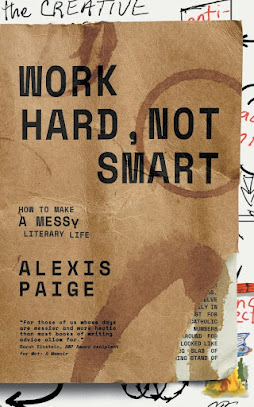
Work Hard, Not Smart

Blurb:
At the ripe age of forty, when Alexis Paige was finally diagnosed with ADHD—Inattentive Type, she rolled her eyes even before the doctor could finish spelling out her new marching orders: The goal now, he said, is to learn how to work smart, not hard.
But that doesn’t sound like any fun, she said. She was going to have to do this, too—ironically, inexplicably, comically—as she did everything else, the hard way.
Part memoir, part craft guide, Work Hard, Not Smart, shows how Alexis lives her messy literary life. She invites you to step into her mismatched shoes. And if you do, you’ll find the writing companion you’ve been looking for.

Thoughts:
Page has written a witty and insightful craft book. It tells you that not all writing runs according to schedules or deadlines. It is a testament to how messy life can be, how far thoughts can wander, and how fleeting success and contentment are. In short, it shows that writing is complicated.
She uses examples from her life to discuss
  • learning and teaching writing
  • navigating the murky waters of writing for a diverse audience
  • dealing with incarceration, assault, rejection, and impostor syndrome
  • writing the story despite (or because of) all the problems and obstacles in your path
Although the blurb says part memoir, part craft guide, in many places it reads like a thesis on other people’s essays and books. The book is full of thoughts that go off tangent and confuse you until they are herded back in to be connected somehow. Page also uses complicated words and jargon, which prompts you to leave the book and search for them.
Having said that, I loved the book. I may read it again.

Note: I received an advance review copy from BookSirens for free, and I am leaving this review voluntarily.

Wednesday, January 5, 2022

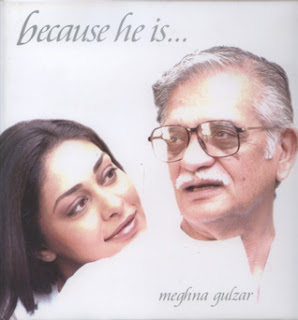
Because He Is...


Blurb:

'Papi says it is wrong of parents to presume that they know better, or know more than their child does. They may be biologically older than their child, but in their experience as parents, they're of the same age. So if I was his two-year-old daughter, he was my two-year-old father. And we were both learning and evolving together -- he as my father and me as his daughter.' All of us know Gulzar as a film-maker, screenplay and dialogue writer, lyricist par excellence, author and poet.
Because He Is... presents a facet of the icon that none of us are aware of -- as a father. In iridescent prose, his daughter, Meghna Gulzar, documents his life, revealing the man behind the legend: in every way a hands-on father, who prepared her for school without fail every day, braiding her hair and tying her shoelaces, and who despite his busy career in cinema, always made it a point to end his workday at 4 p.m. because her school ended at that time, and who wrote a book for her birthday every year till she was thirteen.
From her earliest memories of waking up in the morning to the strains of him playing the sitar to him writing the songs for her films now, Meghna presents an intimate portrait of a father who indulged her in every way and yet raised her to be independent and confident of the choices she made. She also records his phenomenal creative oeuvre, the many trials and tribulations of his personal and professional life, through all of which she remained a priority.
Beautifully designed and illustrated with never-before-seen photographs, Because He Is... offers an incredible insight into the bond between a father and a daughter.

Thoughts:

I was supposed to read Jiya Jale: The Stories of Songs by Gulzar to end 2021. I love all his films and the songs he has written. What he does with lyrics is pure magic but he is also a prolific writer, proficient in so many genres.
However, I was tempted to read Meghna’s book first. It did not disappoint.
It was wonderful seeing Gulzar and getting to know more about his life through her eyes. The bond between him and Meghna is strong and endearing, as is Gulzar’s parenting style.
Make no mistake, this is a daughter’s book about a father she adores. Her account is biased. There are many shortcomings in it but if you are a Gulzar fan like me, you forgive them.
It is a well-written personal description of Gulzar’s life as a parent. It is full of entertaining anecdotes, rare photos, and published and unpublished poems. It is also a memoir of Meghna’s life.