Showing posts with label Fiction. Show all posts

Friday, June 21, 2024

Monterey Bay Mystery


Blurb

Amanda Warren is looking for a second chance in the cozy coastal town of Ocean Wood, but what she finds is a psychic cat and a purrfectly puzzling mystery! Out of luck and out of money, Amanda’s pink dog grooming van is running on fumes when she rolls into the foggy town of Ocean Wood. Seeking a new beginning and a reunion with her twin sister, she finds her sister missing and a dead body in her house. Amanda is determined to clear her sister’s name, but all the quirky, charming neighbors of this Monterey Bay town seem to have a motive. Which one of them is a killer? With time running out, Amanda teams up with her sister’s psychic, amnesiac cat to untangle this fur-midable mystery and sniff out the killer before Amanda’s second chance becomes her last.

Thoughts

The main attraction of this Seren Star Goode book for me was the giant talking cat named Grok. He is sentient but suffers from amnesia. Grok’s human Alexandra is missing from her home when her twin sister Amanda visits her. So, (a confused) Grok refers to Amanda as the clone!

Amanda, mistaken for Alexandra by a hilarious bunch of neighbors, struggles to get answers to her questions. Add a grumpy police chief to the mix. All these funny elements make this enjoyable.

However, the plot seems oddly put together. The switch between Grok’s and Amanda’s points of view is slightly disorienting. The conclusion is interesting but seems rather sudden.


Note: I received a free copy of this book from BookSirens in exchange for an honest review.

Sunday, May 5, 2024

Deadly Quiet

Blurb

Eliza Fox must be smarter than the police and a step ahead of the killer.

When an exchange student is found dead in the music practice rooms of Wexford College, there are few suspects and no clear answers. Martina Noto's parents will fly into California from Rome as soon as they can, but until then the nearest relatives are Martina's cousins: Private Investigator Eliza Fox and her mother, Francesca Noto-Fox.
As detectives Byron Comstock and Jessica Fonseca get familiar with the case, Eliza is determined to help catch Martina's killer. She quickly begins her own investigation and is soon caught up in the twists and turns of finding the murderer, a far cry from her usual work as a paralegal. Often out of her depth, Eliza must overcome her own inexperience and learn to trust her instincts as she fumbles through her first high-stakes case.
Filled with both humor and suspense, this is one traditional mystery novel you don't want to miss.
 
Thoughts

This book by Cathleen Watkins was supposed to be a quick, easy, relaxing read. However, the unexpected heat wave in my part of the world and a few health issues made it slightly laborious.
The story lacked depth because it was told from multiple perspectives, and the back stories of the characters were not well-developed. Although touted as an Eliza Fox mystery, the police seem to have a prominent role in the investigation.
The locale and campus life were described well. Eliza’s methods of gathering information and using a journalist to pressure the police were interesting.
As I was in the middle of reading the V. I. Warshawski mystery series by Sara Paretsky, I couldn’t help comparing the two. But it is early days, and this is just book one in the Eliza Fox series.
So, overall, I would rate this an okay read.

Note: I received an advance copy from BookSirens in return for an honest review.

Wednesday, May 3, 2023

The Dictionary of Lost Words

Blurb:
In 1901, the word ‘Bondmaid’ was discovered missing from the Oxford English Dictionary. This is the story of the girl who stole it.
Esme is born into a world of words. Motherless and irrepressibly curious, she spends her childhood in the ‘Scriptorium’, a garden shed in Oxford where her father and a team of dedicated lexicographers are collecting words for the very first Oxford English Dictionary. Esme’s place is beneath the sorting table, unseen and unheard. One day a slip of paper containing the word ‘bondmaid’ flutters to the floor. Esme rescues the slip and stashes it in an old wooden case that belongs to her friend, Lizzie, a young servant in the big house. Esme begins to collect other words from the Scriptorium that are misplaced, discarded or have been neglected by the dictionary men. They help her make sense of the world.
Over time, Esme realises that some words are considered more important than others, and that words and meanings relating to women’s experiences often go unrecorded. While she dedicates her life to the Oxford English Dictionary, secretly, she begins to collect words for another dictionary: The Dictionary of Lost Words.
Set when the women’s suffrage movement was at its height and the Great War loomed, The Dictionary of Lost Words reveals a lost narrative, hidden between the lines of a history written by men. It’s a delightful, lyrical and deeply thought-provoking celebration of words, and the power of language to shape the world and our experience of it.

Thoughts:
The book - The Dictionary of Lost Words by Pip Williams – took longer than I expected. I was quite excited when I first saw the title and read the blurb. A novel about words, their etymology, dictionaries, scholars, researchers, lexicographers, libraries… It seemed like a treat.
Esme Nicoll, the main protagonist, is introduced at a very young age and then grows into a woman in her thirties quite slowly. She grows up in her father's workplace and falls in love with words. Her relationship with him is wonderful—the instance where she has her first periods is endearing. Their mutual love for language strengthens their bond.
As time passes, the story naturally becomes more about Esme's personal issues. Her pregnancy, and her responses to various issues, such as the women's suffrage movement and the casualties of England at war, gain prominence.
Esme seemed passive and bewildered by it all. Her passion for words also seemed dull after a while. For example, Esme collects words used by the underprivileged, which are excluded from the Dictionary. However, her collection of words goes into a trunk under Lizzie's bed.
Later the man in her life publishes a single copy of it and gifts it to her. Similarly, although she understands why women's rights are important, she never does anything about it.
The other characters were brilliant and memorable. I would have liked to hear more about Edith Thompson, who acts like Esme's self-appointed aunt. She is an expert historian and researcher. She has a circle of scholar friends who visit her house regularly for afternoon tea.
Similarly, the characters of Edith's sister and Lizzie, a lifelong servant at the Murray household, are also quite interesting. Lizzie's mother died when she was eleven. She and her siblings were sent to orphanages. Then she becomes a servant, working more than 16 hours a day, rising earlier than everyone else in the household, and going to bed after them.
Although she has no life of her own or any chance of a husband or family, she wants no part of the suffragist movement and is not convinced that her lot would change. She is simply thankful not to be out on the streets, fending for herself.
The writing is good. The epilogue and the author's note at the end are quite interesting.
Williams has researched the words used by women and the underprivileged, their importance in their lives, and how these were ignored or dismissed by people in charge of creating dictionaries quite well.
To me, this is the most interesting aspect of the story. However, it is often swept aside in favour of other plot threads. My enthusiasm started draining away when that happened.
To summarize—a good book that missed being great by a hair.

Sunday, February 12, 2023

Coraline

Blurb:
There is something strange about Coraline's new home. It's not the mist, or the cat that always seems to be watching her, nor the signs of danger that Miss Spink and Miss Forcible, her new neighbours, read in the tea leaves. It's the other house - the one behind the old door in the drawing room. Another mother and father with black-button eyes and papery skin are waiting for Coraline to join them there. And they want her to stay with them. For ever. She knows that if she ventures through that door, she may never come back.

Thoughts:
I read American Gods by Neil Gaiman when I was experiencing Multiple Sclerosis-related brain fog. Needless to say, I couldn't fully appreciate it. (I hope to revisit it under better circumstances. I also plan to read Anansi Boys.)
So, when the same friend, who gifted them to me, gave me Coraline, I was not sure if I would like it. I did not read it until now, despite the cover having a cat on it.
Coraline is a disturbing story that is exciting, beautifully written, and well-rounded. It is sinister but also full of humour. It has vivid descriptions and great characters.
  • Coraline is brave, kind, and wise for her age. She is quirky, determined, independent, and stubborn. Because she is also curious, adventurous, and not easily scared, she opens the door on the wall.
  • The cat is touchy, standoffish, superior, and wilful but is a true friend.
  • Her neighbours are zany and interesting and are described from a child's perspective.
  • The “other mother” and her story are a bit of a mystery. Who or what is she? Why does she do the things she does? This woman is a scary character. She springs many psychological traps.
The book also makes you examine your sense of home. It reminds you that it may not represent a physical space and that it may not always be safe and comfortable.
It tells you that home can be an emotional concept that consists of your relationships with your family and friends. Even when you are upset with your family or friends, there can still be an underlying love, the memories of which can help you overcome the most terrible obstacles.
I enjoyed the illustrations by Chris Riddell. Overall, a good book.

Wednesday, January 25, 2023

The Cat Who Saved Books


Blurb:

A celebration of books, cats, and the people who love them, infused with the heart-warming spirit of The Guest Cat and The Travelling Cat Chronicles.
Bookish high school student Rintaro Natsuki is about to close the second-hand bookstore he inherited from his beloved bookworm grandfather. Then, a talking cat named Tiger appears with an unusual request. The feline asks for—or rather, demands—the teenager’s help in saving books with him. The world is full of lonely books left unread and unloved, and Tiger and Rintaro must liberate them from their neglectful owners.
Their mission sends this odd couple on an amazing journey, where they enter different mazes to set books free. Through their travels, Tiger and Rintaro meet a man who leaves his books to perish on a bookshelf, an unwitting book torturer who cuts the pages of books into snippets to help people speed read, and a publishing drone who only wants to create bestsellers. Their adventures culminate in one final, unforgettable challenge—the last maze that awaits leads Rintaro down a realm only the bravest dare enter...

Thoughts:

Rintaro Natsuki, the 17-year-old protagonist of The Cat Who Saved Books, inherits a bookshop when his grandfather dies. He is preparing to close it up and go live with an aunt when Tiger, a talking ginger tabby cat, appears in the shop and demands that he help it save books.
Tiger takes him inside four labyrinths filled with books. Sayo, Rintaro's classmate who visits him frequently, also accompanies them from the second trip onwards.
In the four mazes, they meet people who the author, Sōsuke Natsukawa, represents as people who misuse, mistreat, or misunderstand books:
  • The first person is only interested in the number of books he reads. He wants to read the most books possible in his lifetime; he no longer derives any pleasure from reading.
  • The second one thinks that the only way to keep people interested in reading is to shorten/summarize or cut books.
  • The third does not care for great books—he is interested only in popular books, meaning those that sell well.
  • The fourth person, one whom Tiger calls the most dangerous, makes Rintaro question the meaning/purpose of literature and books.
If you love books and agree with the author's opinions, you may enjoy this. I did, especially because I love cats and books. However, it left me wondering about many things:
  • Why are the characteristics of Rintaro, Sayo, and Tiger described repeatedly?
  • Where did Tiger come from? What does it represent/symbolize?
  • The title says the cat who saved books. Then why is Tiger only taking Rintaro to places where books are being mistreated and Rintaro doing the actual saving?
  • Are the villains actually evil or just representatives of the changing times?
  • Are classics disappearing? Aren't they more accessible these days? Does everyone who loves books need to read classics? If readers find them difficult, isn't it all right if they read condensed versions or summaries?
  • Don't readers' tastes or neurodivergence count?
  • The grandfather, the bookshop owner who left it to Rintaro, was a former university professor. He has supposedly imparted a lot of wisdom, especially about the 'power of books'. However, that is not clearly explained in the book.
  • How will Rintaro, a high school student, manage to run the shop?
That said, the book emphasizes the general importance of books and the joy of reading. It talks about books making you aware of other people and places and helping develop compassion, tolerance, and empathy.
Rintaro tells Sayo that if you find a book difficult, it's because it contains something new to you and that it offers you a challenge. This is true not just of books but a lot of the things you encounter in life.
I can't comment on the translation by Louise Heal Kawai. I liked her note about the hows and whys of it at the end of the book. 
To summarize, a simple story with a touch of magical realism that makes you think.

Thursday, October 27, 2022

The Shade Under the Mango Tree

Blurb:

After two heartbreaking losses, Luna wants adventure. Something and somewhere very different from the affluent, sheltered home in California and Hawaii where she grew up. An adventure in which she can also make some difference. She travels to a foreign place where she gets more than she bargained for.
Lucien, a worldly, well-traveled young architect, finds a stranger’s journal at a café. He has qualms and pangs of guilt about reading it. But they don’t stop him. His decision to go on reading changes his life.
Months later, Luna and Lucien meet at a bookstore where Luna works and which Lucien frequents. Still hurting from her losses, Luna finds solace in Lucien’s company and his tales of world travel.
Inspired by Lucien, she goes to Cambodia. What she goes through in one of its rice-growing villages defies anything she could have imagined.
An epistolary tale of courage, love and loss, and the bonds that bring diverse people together.

Thoughts:

This book by Evy Journey is a romance and a YA novel rolled into one, with a feel of a memoir. It begins as a tender story, but later develops into a slightly more complex account as layers are added on.
Written in a daily journal or diary style, the book is engaging. It tells you about two strangers discover each other, interact, fall in love, and experience life together. It also portrays the deep family ties that the main protagonists have with their grandparents.
The first-person point of view of the central characters makes it an interesting read. Journey describes the thoughts, scenes, and settings, especially of Hawaii and Cambodia, rather well.
Coincidentally, I was watching a TV series based in Hawaii when I was reading this book, which made it quite easy for me to visualize the sights and smells in the descriptions.
Overall, it was as relaxing as sitting quietly on a bench under the shade of a mango tree!

Note:

I received an advanced reader copy of the book from NetGalley in exchange for an honest review.

Thursday, September 1, 2022

The Girl Who Talks to Ashes


Blurb:

Fifteen-year-old Willow is terrified of her new baby, Lilah, who has a peculiar form of epilepsy. Every time Lilah's eyes glaze over, terrible things happen: flowers shrivel, food goes to rot - even Willow's long, auburn hair turns stark white. But it's the death of the family cat that becomes the last straw; in the middle of the night, Willow and her mother dump the infant at the fire station two towns over – and are never heard from again.
The next morning, Chief Stanley Quinn takes Lilah home and cares for the toddler as best as he can. With medication, her epilepsy remains under control... For the most part.
But as a teenager, Lilah isn't always keen on taking her pills, and when she sneaks away to a rock concert with the cutest boy in school, something terrible happens, landing both of them in the hospital. After Stanley breaks down and confesses everything to his adopted daughter, she decides to track down the young girl who gave her up sixteen years ago; the young girl who never made it home that night… The young girl who is now presumed to be dead. Soon, Lilah's quest to find her birth mother becomes a quest to solve a sixteen-year-old missing persons case. She has everything she needs to find her – she just needs to learn how to control her peculiar ‘gift’ before she kills someone.
Again.

Thoughts:

This book by Rachel Rener is an interesting mixture of opposites. It is creepy but charming. It is fast-paced but has solid characters and deeply emotional relationships. 

And, the fantasy element in it—the time-bending—is believable! The plot is well-thought-out and complimented by subtle and clever storytelling. 

The main protagonist understands her ability early on and explains it well to others. This means that she garners support from her father, boyfriend, and later on the police chief quite easily. Consequently, the relationships in the book are not entangled in unnecessary misunderstanding or angst.

Overall, a quick, light, enjoyable read. 


Note: I received a digital copy via BookSirens in return for an honest review.

Thursday, May 12, 2022

A Thousand Reasons Not To Run

Blurb:

Traumatized by a childhood tragedy and her ongoing therapy no longer effective, Lexi lives a lonely life in Tribune, a small town nestled on a bayou in the southern United States. Her therapist offers an ultimatum: find friends or find another therapist.
Lexi reluctantly joins a running program that meets at the Volt, an egalitarian waterfront center that is the pride of the town. Just as she begins to develop friendships and enjoy some safety, she learns of a secret plot to close the Volt, scatter its resources, and sell the prime land to a mysterious group of investors.
As she makes the decision to put her job, her anonymity, even her life on the line to save this precious refuge, a stranger arrives from her past with a story she doesn’t want to hear.
Join Lexi and her band of reluctant runners as they uncover long hidden secrets and find the value of true friendship.

Thoughts:
In this book, Trish Taylor tells the story of how a ragtag group of people works together to achieve something, despite their insecurities and struggles. They bond well and support each other while battling powerful adversaries.
Initially, the writing style did not sit well with me as the story seemed to start in the middle, without any background. Besides, I am not a great fan of flashbacks unless they are masterfully well-written. However, the story soon won me over as it had my favourite theme of second chances/starting over.
The book also had the right amount of mystery to keep me interested. The main character Lexi had a startling past. It is revealed slowly as the story unfolds.
Enjoyable!

Note: I received a free copy of the book from BookSirens in exchange for an honest review.


Monday, April 4, 2022

Summer of Georgie

Blurb:

Deep into her 40s with a lackluster career, Georgie wonders how she became so...underwhelming. If she’s not battling her micromanaging boss and egotistical CEO, she’s trying to quiet her inner voice, the one whispering that she hasn’t lived up to the cool, funny and creative person she used to be.
When she's fired for finally pushing back on her CEO’s questionable business practices, Georgie – with the support of her husband and book club friends– uses her free summer to rekindle latent talents and redefine success. But just as she figures out what’s next, an unexpected hurdle threatens to turn her summer of opportunity into a zero-sum disaster.
Summer of Georgie is a fresh and likably snarky take on the “middle age do-over,” with an authentic portrayal of friendship, marriage, motherhood, and that inner critic inside us all.

Thoughts:

This debut novel by Kerry Crisley was just what I needed after reading so much nonfiction. It also helped me navigate through a few days of physical pain.
A job for which the protagonist Georgie is overqualified and a terrible boss who does not appreciate her—something that many of us can relate to. Of course, Georgie is fired when she is assertive and refuses to bow down to unreasonable demands. Then you see her being assertive, unleashing her creativity and passion, and forging ahead to grab her dreams.
That and the portrayal of the supporting characters won me over. Her husband Dan seemed very realistic in that although he worries about their finances, he supports her wholeheartedly. Her parents, her friends, and her children are also similar to people you might meet in your everyday life.
A fun read, this book will make you root for Georgie’s success. I enjoyed it more because it is about women helping other women.

Note: I received an advance review copy from BookSirens in exchange for an honest review.

Friday, March 4, 2022

The Reading List

Blurb:

An unforgettable and heartwarming debut about how a chance encounter with a list of library books helps forge an unlikely friendship between two very different people in a London suburb.
Widower Mukesh lives a quiet life in the London Borough of Ealing after losing his beloved wife. He shops every Wednesday, goes to Temple, and worries about his granddaughter, Priya, who hides in her room reading while he spends his evenings watching nature documentaries.
Aleisha is a bright but anxious teenager working at the local library for the summer when she discovers a crumpled-up piece of paper in the back of To Kill a Mockingbird. It’s a list of novels that she’s never heard of before. Intrigued, and a little bored with her slow job at the checkout desk, she impulsively decides to read every book on the list, one after the other. As each story gives up its magic, the books transport Aleisha from the painful realities she’s facing at home.
When Mukesh arrives at the library, desperate to forge a connection with his bookworm granddaughter, Aleisha passes along the reading list… hoping that it will be a lifeline for him too. Slowly, the shared books create a connection between two lonely souls, as fiction helps them escape their grief and everyday troubles and find joy again.

Thoughts:

In her debut novel, Sara Nisha Adams talks of the magic of books and the human connection that they can forge. I believe in both.
I often think that books find readers rather than the other way around. Many a time, I find myself reading something and thinking that is exactly what I wanted to hear right now.
Similarly, readers are considered introverted and unsociable, preferring the company of books over people. Of course, some of us probably are. Yet, you may find so many of us referring to books that led to great decisions, charitable acts, and good civic sense.
Adams tells you a story of books bringing about healing and comfort during devastating loss. She also manages to remind you why reading books is important without being preachy.
An old widower Mukesh, who visits the library for the first time in his life, and a teenage girl Aleisha, who reluctantly takes up a summer job there, bond over books. These books are from a handwritten list that she finds tucked inside another book. They have nothing in common.
However, their plots align subtly with the lives of the people who read them. The readers find things that resonate with their circumstances and learn from them. I liked the idea of introducing plots of other novels into the plot of the book.
Adams does not discuss the books in detail. You don’t need to read any of them either. She gives you a general idea about them and how Mukesh, Aleisha, or someone else relates to them.
The opinions of those of you who have read them may differ from those of Adams. This is quite natural because your experiences influence your perceptions.
A few questions remain unanswered. For example, what is Aleisha’s mother suffering from? Why did her brother make such a drastic decision?
This did not bother me as the story did not revolve around these two main characters. Adams expertly weaves in their families, friends, and a larger circle of people with whom they interact.
All of them have their own stories of loss, trauma, or loneliness. Although there are potential romances, the emphasis is on friendship and compassion.
I love to read anything about books, libraries, and reading. I chose this book because of its title. I am glad I did.

Monday, February 7, 2022

The Wicked Bible

Blurb:

After a winter when she solved the cold case of a high school friend found dead in The Barn, Deborah Strong needs a distraction. She joins a conference entitled "Libraries: Where Have We Been, Where Are We Going?" that will be useful for her work as a librarian in the small town of Shelby. The setting at a picturesque college in New Hampshire should also be healing.
Deborah's project for the week plunges her into a mystery that would delight most researchers. What are the connections between a Bible dubbed "The Wicked Bible," a woman called "The Wickedest Woman in New York," a book written by Abigail Brewster, and a letter penned to this nineteenth-century author? As she slowly unravels the connections, Deborah confronts an event from her own past and anticipates a future that could be as brilliant as New Hampshire's September foliage.
The second in the Deborah Strong series cleverly connects to the research Deborah's friend Susan Warner discovered about Abigail Brewster in Dean's Death of the Keynote Speaker.

Thoughts:

The Wicked Bible is book two in Sharon L. Dean’s Deborah Strong Mysteries. BookSirens gave me this book in exchange for an honest review. I recently read and reviewed The Barn, the first book in the series, because I dislike starting a series midway.

Positives
  • I love that Deborah is a librarian. It leads her to interesting projects such as the one she takes up in this book.
  • Dean has cleverly interwoven American history of the 1880s, with the Wicked Bible, wherein one of the Ten Commandments is ‘Thou Shalt Commit Adultery’. I learned more about it and Madame Restell.
  • The descriptions of rural and academic milieus are vivid and clear.
  • Although this book has references to The Barn and its characters, they are infrequent and unobtrusive. It can be read as a standalone.
Negatives
  • Plot points, such as that of the blind date and the James-Reich-Brewster story, were used as mere twists and were not resolved. Was that to entice people to read the Susan Warner series?
  • The mystery element fell short because I could guess who the thief/killer was halfway through the book.
  • The culprit is conveniently injured in a car accident, which is mentioned in passing!
To sum up, it is like The Barn in that it is a good book but it feels unfinished and leaves you discontented. 

Note: I received a free copy from BookSirens, and I am leaving this review voluntarily.

Thursday, January 20, 2022

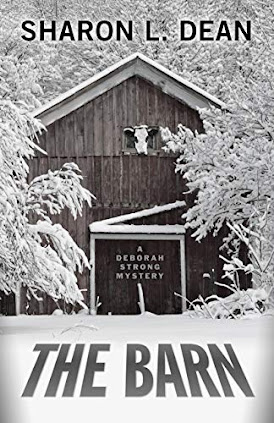
The Barn

                                    
Blurb:

A barn with a wooden cow’s head peeking out of the loft…
Two girls bicycling on a September day in 1990…
The friend they find dead in the barn…

For the next thirty years, the case of Joseph Wheeler’s murder lies as cold as a New Hampshire winter. Deborah Strong has settled in the town she grew up in, learning to heal after her friend’s murder, and later, the deaths of her husband and child in an automobile accident. When her former best friend Rachel Cummings returns home for the funeral of Joseph’s mother, the precarious peace Deborah has found as the town’s librarian is threatened.
Against the backdrop of the beautiful but cold New Hampshire landscape in January, Deborah and Rachel reopen the cold case of their murdered friend, and uncover secrets about their neighbors that have festered for thirty years, as they often do in small towns.
The Barn is a story of friendship lost and recovered, of secrets buried and revealed, and of the power in forgiving others… and ourselves.

Thoughts:

This is the first book in the Deborah Strong mystery series by Sharon L. Dean. It is a standalone book.
I read it because I received an ARC of the second book to review, and I dislike leaving previous books of a series unread.

Positives:
  • Premise
Two estranged friends meet after many years and experiences to try to solve the murder of a common friend.
  • Writing style
Vivid descriptions of the small town Shelby, its people, and its climate.
  • Mystery
Enough secrets and suspense to keep readers guessing.
  • Protagonist
Likable, strong woman. A librarian!

Negatives:
  • Plot and character development
Joseph and Mary Wheeler’s deaths drive the story. Yet, not enough details about their characters or their lives.
  • Relationships
- Rachel and Deborah are friends who have been out of touch for long. When they join to solve a murder, you would expect them to talk. However, you see them finding more significant secrets about each other than the murder.
- The relationship between former librarian Bertha and Seth raises many questions but Dean leaves us to wonder and speculate.
- The story is peppered with mentions of Lucille’s life and experiences, perhaps just to add to the mystery. Dean tells you that Mary and Lucille were friends but fought right before Mary’s death. She hints at the reason but does not elaborate on that, probably because it is unrelated to the murder.
  • Cross-reference to other book series
Susan Warner, the protagonist of Dean’s Susan Warner Mystery series, makes a cameo appearance. I expected her to reveal something of great importance or help Deborah and Rachel solve the mystery. However, that was not to be. The whole idea seemed rather wasteful.
  • Sleuthing
Deborah and Rachel did not appear to do much active ‘detecting’. All they seemed to do was ask around, annoying people who wished to forget the past and get on with their lives.

To summarize, a good book that didn't quite hit the spot. I wanted to shake the story hard and wait for everything to settle in the hope that when they did, all the elements would sit right.

Saturday, December 18, 2021

Foxman and the Cat Burglar

Blurb:

A stagehand and an aspiring actor are drawn into a masked rivalry, never suspecting that hiding behind the mask is a familiar face.
Cassandra’s life flashes before her eyes when she gets trapped in a subway door. It’s a disappointing life: she never landed the big role and she may be engaged to the wrong man. Rescued by a kind-eyed stranger, Cassandra gets a second chance to make good on her Broadway dreams, straighten out her love life, and deliver some karmic justice to the city in the guise of a slinky Cat Burglar. So long as she can shake off that pesky Foxman and the bungling police detectives on her tail.
Wilfredo’s skateboarding fox costume is a hit on Halloween. But an unexpected tussle with a fleeing thief in a Cat Burglar suit leads to a spectacular wipeout. He has no clue his mishap has been recorded in a soon-to-be viral video. Nor does he recognize his masked opponent as the green-eyed girl whose number he lost a month ago. Reveling in his every blunder is Captain Pete, the ventriloquist dummy from his childhood, whose snarky comments leave poor Wilfredo clinging to his sanity by his fingernails.

Thoughts: 

The main protagonists of this book, Cassandra and Wilfredo, were ordinary people with unique quirks and hence, very relatable. It was wonderful to see them get a few lucky breaks. They shed their insecurities, followed their hearts’ desires, and achieved some of their goals.
Even Gregory and Ruby, the characters with negative shades, were not nasty or devious. It was heart-warming to see them also ending up relatively happy.
Captain Pete, Toby, and the detectives Molina and Garcia were all quite entertaining.
Initially, I had pegged this as a sweet, funny, uncomplicated story. Yet, Delas Heras made me think about the lives of junior artists, stagehands, secretaries, assistants, and the numerous other staff members who help maintain the glamour and glitz of the show business and its stars.
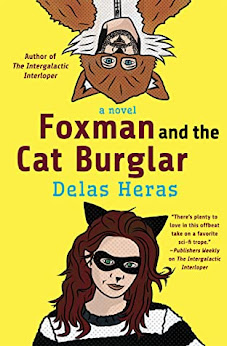
The title and cover reminded me of comic books. The situations were slightly hyperbolic. Both were fitting as the characters were prone to dressing up as ‘Cat Burglar’ and ‘Foxman’ and roaming around committing or preventing crimes.
I am glad this is one of the books I read towards the end of 2021, which turned out to be a rather rough year.

Note: I received an advance review copy from BookSirens for free, and I am leaving this review voluntarily.

Sunday, November 14, 2021

Unbound

Blurb:
Unbound is a collection of some of the most significant writing by Indian women over the past two thousand years. Divided into eleven sections, it encompasses writing on various aspects of life: spirituality, love, marriage, children, food, work, social and individual identity, battles, myths and fables, travel, and death. While many of the pieces are commentaries on the struggle that women undergo to overcome obstacles—social and political—all of them showcase the remarkable creative ability of the writers.
Selected from hundreds of novels, memoirs, essays, short story collections and volumes of poetry that were either written in English or that have been translated into English, the pieces in this collection include the most distinctive and powerful voices from every era.
There are verses from the Therigatha, written by Buddhist nuns (circa 300 BCE), and writing by poet-saints like Andal, Avvaiyar, Lal Ded, Mirabai; modern classics by writers like Ajeet Cour, Amrita Pritam, Arundhati Roy, Attia Hosian, Bama, Bulbul Sharma, Irawati Karve, Ismat Chughtai, Kamala Das, Krishna Sobti, Mahasweta Devi, Manju Kapur, Mannu Bhandari, Mrinal Pande, Nayantara Sahgal, Pinki Virani, Qurratulain Hyder, Rashid Jahan, Romila Thapar, Sarojini Naidu, Saudamini Devi, Shivani; and powerful new voices from our time like Arundhathi Subramaniam, Nilanjana Roy, Nivedita Menon.
Profound, exhilarating, haunting, angry and meditative, Unbound is a collection that will shatter stereotypes about women's writing in India.

Thoughts:
‘Unbound: 2,000 Years of Indian Women’s Writing’ is a great compilation of writings of Indian women writers, some of whom are quite famous, some contemporary, and some neither (and hence were unknown to me).
The book is a small window into the vast volume of work of Indian women writers. In the excellent introduction to the collection, the editor Annie Zaidi says that the work was daunting and she worked under a severe space constraint. There are over a hundred individual pieces of writing (including fiction, non-fiction, and poetry) in all.
She has divided them into eleven categories. At the beginning of each category, she mentions whose works have been included and why. There is also a detailed list of the writers and translators at the end of the book. She admits that the choices were subjective and that the collection is not comprehensive.
Zaidi has researched far and wide, collected information, and given it a logical structure, with clear rationale. From whichever angle you look at it, her work is commendable. Researching, reading, categorizing, and selecting works for this anthology, spanning 2000 years and so many languages, must have been a mammoth task. 
Besides, even now, women’s writing is a topic of debate and controversy—many don’t recognize it as a category and some regard it with disdain.  
I admit that I did not like some parts of the book. The styles, times, themes, and genres are so varied that it is sometimes hard to understand the logic behind the inclusion of certain pieces. 
I put the book away many times but always returned to it. This is one of the reasons why it took me over ten months to complete it. Another reason is the small printing, which made reading quite difficult.
However, I am sure there is something for everyone in the book. It introduced me to so many writers and books. As an Indian woman, I could relate to some of the writings. Some of the short extracts are lovely. Some are inadequate and dissatisfying.
Either way, they can make you curious enough to find the books and read them in full. Overall, I enjoyed the book and recommend it wholeheartedly.

Sunday, October 17, 2021

Slow Horses, First Grave on the Right

It’s been some time since I posted a review. Although I have been reading books, I didn’t feel like writing about them.
I read the first books of two series: Slow Horses (Slough House by Mick Herron) and First Grave on the Right (Charley Davidson by Darynda Jones).

Blurb (Slow Horses): The first book in CWA Gold Dagger Award-winning British espionage series starring a team of MI5 agents united by one common bond: They've screwed up royally and will do anything to redeem themselves.
London, England: Slough House is where the washed-up MI5 spies go to while away what's left of their failed careers. The "slow horses," as they’re called, have all disgraced themselves in some way to get relegated here. Maybe they messed up an op badly and can't be trusted anymore. Maybe they got in the way of an ambitious colleague and had the rug yanked out from under them. Maybe they just got too dependent on the bottle—not unusual in this line of work. One thing they all have in common, though, is they all want to be back in the action. And most of them would do anything to get there─even if it means having to collaborate with one another.
River Cartwright, one such “slow horse,” is bitter about his failure and about his tedious assignment transcribing cell phone conversations. When a young man is abducted and his kidnappers threaten to broadcast his beheading live on the Internet, River sees an opportunity to redeem himself. But is the victim who he first appears to be? And what’s the kidnappers’ connection with a disgraced journalist? As the clock ticks on the execution, River finds that everyone has his own agenda.
Thoughts: Slow Horses had an interesting style and set of characters, but the plot was chaotic and slow-paced. I finished reading it because it is about a group of losers and misfits trying to have a second chance at a meaningful existence. Probably because of that, I want to read the other books in the series.

Blurb (First Grave on the Right): Charley Davidson is a part-time private investigator and full-time grim reaper. Meaning, she sees dead people. Really. And it's her job to convince them to "go into the light." But when these very dead people have died under less than ideal circumstances (like murder), sometimes they want Charley to bring the bad guys to justice. Complicating matters are the intensely hot dreams she's been having about an entity who has been following her all her life...and it turns out he might not be dead after all. In fact, he might be something else entirely. But what does he want with Charley? And why can't she seem to resist him? And what does she have to lose by giving in?
With scorching-hot tension and high-octane humor, First Grave on the Right is your signpost to paranormal suspense of the highest order.
Thoughts: Although I laughed while reading First Grave on the Right, the book did not work for me. I have read far better urban fantasy series. Besides, it is less actual detective work and more talking to ghosts.
Maybe the series warms up and the books that follow are brilliant. However, I don’t expect a drastic change in the setting of the story or its premise. So, I don’t want to read them.


Tuesday, August 3, 2021

The Yellow Dinghy Cafe

Blurb:

When Cybelle, Jasmine and Michaela finish high school, they go their separate ways, but the distance between them is no match for the secrets, fears and hopes that bind them together. Cybelle has a stalker, an anxiety disorder and warring parents. Jasmine studies at a regional university and her social life explodes, but the guy she falls for is not what he seems. To make matters worse, her flatmate bullies her and Jasmine wonders whether there is anyone she can trust.
Michaela works at The Yellow Dinghy Café and meets Charlotte, who makes a scene during the morning rush. Peter, the owner-operator has been receiving threatening letters and Michaela suspects that Charlotte's mother is responsible. After all, she's using an assumed name and has been schmoozing with Peter. Or could it be Ben, who won't take no for an answer? He's been wining and dining wealthy older women and is wanted for petty theft all along the East Coast.
At the end of the year the three friends organise a fund-raiser for the New South Wales drought, which Jasmine has experienced first-hand. The night promises to be a success but disturbing revelations and petty jealousies loom large. Michaela always thought Cybelle had the perfect life and Jasmine, who is on scholarship resents being defined by her intellect. Can they resolve their problems and repair their friendship before it's too late? And who is lurking in the shadows, determined to sabotage it all?

Thoughts:

Set in Australia, this novel by Sophie Chenoweth is about how three young high school friends, Jasmine, Michaela, and Cybelle, cope with the next phase of their lives. As they come from dissimilar backgrounds, they have aspirations and expectations quite different from each other.
Cybelle, from a wealthy family, goes on a tour before deciding what to do next. She first goes to England and then to Vietnam, where her older sister is an English teacher.
Jasmine, who wishes to escape from the city and the harsh reality of her father’s illness, enrolls in a rural university in New South Wales. She finds that she knows next to nothing about boys and communal living.
Michaela is trying to figure out what her future direction should be. In the interim, she joins as a waitress at the Yellow Dinghy Café, owned by Cybelle’s uncle Peter.
All three girls find that they have much to learn about the real world and that nobody’s life is perfect. They go through many emotions as they transition from teenagers to young adults. However, their friendship stays intact through all the turmoil and challenges they face.
Probably because of my age and current circumstances, I was unable to relate to the protagonists. Despite this, it is a pleasant, enjoyable, well-written book.

Note: 

I received an advance free copy of this book from BookSirens in exchange for an honest review.

Tuesday, July 13, 2021

The Extraordinary Side of Absence

Blurb:

Jackie Foster understood at a very early age how her father’s drug addiction shaped her life: the limited space of a motorhome, the concealed violence, and—ultimately—the loss of the person she loved the most. Elena Whitehill knew she would never have a single concern in her life that had been planned out down to taking over her family’s pharmaceutical empire as long as she checked her aspirations at the door. When their universes collide in childhood, the two girls make a pact to support and protect each other as they challenge tradition and authority, poverty and classism, all in the pursuit of passion and success. But will their friendship be enough to help them re-write the legacies they inherited from their families?
In this collection of twenty-two stories that unfold over sixteen years, Jackie Foster and Elena Whitehill will prove that it doesn’t matter how many obstacles you face in life; everything is touched by the extraordinary when there is a true friend by your side.

Thoughts:

The two protagonists of the book, Jackie and Elena, are young girls. They come from circumstances quite different from each other. In the lunchroom on the first day of third grade, Jackie supports Elena. Thus begins a friendship based on unconditional love and acceptance.
Ana Hantt and Josie Baron have created strong characters true to themselves. They support each other and are brave enough to overcome all obstacles and pursue their dreams.
The book follows the characters’ histories from their childhood and shows many moments where their age and personality evolve. Both girls have conflicts in their families, but they deal with them secure in each other’s support.
I am looking forward to their next book, which would carry these girls’ stories forward.

Note: I received a free ARC from BookSirens and am leaving this review voluntarily.

Tuesday, June 1, 2021

Odiyan

Blurb:

നമ്മുടെ കാഴ്ചയില്‍ നിന്നു മറഞ്ഞു പോകുന്ന നിരവധി സംസ്കാരങ്ങളുണ്ട് പക്ഷേ നാം അതു ശ്രദ്ധിക്കാറില്ല. കാണാറുമില്ല. പരുത്തിപ്പുള്ളി ഗ്രാമത്തില്‍ ഒരു പറത്തറയും അവിടെ പറയകുടുംബങ്ങളും. അവരെ ചുറ്റിപ്പറ്റി ദൈവികവും മാന്ത്രികവും നീചവും നിഗൂഢവുമായ ഒരുപാട് കഥകളുണ്ടായിരുന്നു.

[A rough translation: Although many cultures keep disappearing from our society, we don’t realize it or pay attention to them. The village of Paruthippulli, a Paraya thara (settlement) there, the families that live in that thara, and the many divine, magical, vile, and mysterious stories about them.]

Thoughts:

As the author P Kannankutty explains in this video, he does not know any odiyan. This book is based on hearsay accounts and imagination. 

Kannankutty says that odiyans, who are from the Paraya community, change into the shape of animals, such as cats, bulls, snakes, etc. The animal they turn into may have some imperfection, by which they can be recognized. For example, the bull they turn into may not have a tail.

They also perform odi, a form of black magic, but never for personal reasons. Instead, they use it to help others, largely to settle personal scores. However, according to Kannankutty, odiyans were not villainous or negative characters. They were a part of  society.

The book's story is set at a time when people lived in caste-based settlements or ‘tharas’. Although they are supposed to be valued for their role in society, the two odiyans in this book are sad, cursed characters because of their unique circumstances and the effect of changing times.

The other characters too do not have much joy in their respective lives. I prefer books with some sort of triumph or happiness for at least some of them, if not all. That being said, I liked this book despite its overwhelming sadness. 

I have heard many tales about odiyans from my mother and grandparents. So, the premise of this book was not new to me. I am also conversant with many customs, rituals, and ways of living mentioned in the book. 

Moreover, I could see shades of familiar faces in many of the characters. The descriptions of the land, the rituals, and the general milieu also reminded me of my ancestral home and its surroundings.

Monday, March 8, 2021

Folk Songs for Trauma Surgeons


Blurb:
With Folk Songs for Trauma Surgeons, award-winning author Keith Rosson once again delves into notions of family, identity, indebtedness, loss, and hope, with the surefooted merging of literary fiction and magical realism he’s explored in previous novels. In “Dunsmuir,” a newly sober husband buys a hearse to help his wife spread her sister’s ashes, while “The Lesser Horsemen” illustrates what happens when God instructs the Four Horsemen of the Apocalypse to go on a team-building cruise as a way of boosting their frayed morale. In “Brad Benske and the Hand of Light,” an estranged husband seeks his wife’s whereabouts through a fortuneteller after she absconds with a cult, and the returning soldier in “Homecoming” navigates the strange and ghostly confines of his hometown, as well as the boundaries of his own grief. With grace, imagination, and a brazen gallows humor, Folk Songs for Trauma Surgeons merges the fantastic and the everyday, and includes new work as well as award-winning favorites.

Thoughts:
This book is a collection of short stories. I do not like short stories because I view them as parts sheared off a novel. 
For someone who keeps wondering about characters even after finishing full-length novels, short stories can be downright painful. You’d think that would automatically make me not read it.
However, this is also the first time I have come across a Keith Rosson book. So, I thought I should read some and then decide. 
As I mentioned earlier, short stories leave me wondering what happened next. Rosson takes it to the next level and leaves them with non-traditional endings. I forgave him only because somehow they made sense to me and because some parts of the book reminded me of Philip Pullman, Neil Gaiman, and even Terry Pratchett!
I am always intrigued by the different angles from which people view things. Rosson has a different lens altogether. His stories have this wacky sense of fun mixed with dark, twisted sense of misery. Shades of dystopia, apocalypse, a slice of the underbelly of the world, and sometimes, a touch of tenderness and hope...

Two asides:
  • He has not mentioned the title anywhere else. So, I never got to know which folk songs trauma surgeons listen to. However, here’s what he told Paul Semel about the title.
  • I did not read ‘Their Souls Climb the Room’, which is about a hog-slaughtering plant and a man who works there.
To sum up, an interesting book with something to smile at and something to despair about.

Note:
I received a free copy of the book from Tricia Reeks at Meerkat Press. I reviewed it voluntarily.

Monday, March 1, 2021

Satin Pumps


Blurb:

It was the midcentury murder that fascinated a nation and kept it glued for two years to radio, television and newspapers through three trials.
Did the handsome, wealthy doctor and his beautiful young paramour plan to kill his glamorous socialite wife?
Or did the gun accidentally discharge as he claimed?
Early in the evening on July 18, 1959, Dr. Bernard Finch and his girlfriend, Carole Ann Tregoff, drove from their Las Vegas love-nest to the Finch home in the Los Angeles suburb of West Covina to speak to his wife Barbara about obtaining a speedy divorce in Nevada. But the plan went awry and the conversation turned deadly with Barbara’s lifeless body ending up in her in-laws’ backyard next door.
After a high-speed chase with police, Finch was arrested the next morning in Las Vegas and charged with Barbara’s murder. Then, during his court hearing in West Covina, Carole was arrested on the witness stand and charged as his accomplice.
Soon others were named as part of a larger conspiracy. But who were they and what parts did they play in these deadly events?
Set against the midcentury CinemaScope glamour of Hollywood, Las Vegas and Palm Springs, “Satin Pumps: The Moonlit Murder That Mesmerized The Nation”​ is a true crime memoir written by former Finch patient, screenwriter and author Steve Kosareff.

Thoughts:
An unusual true crime book, in that it is also a memoir, and not of anybody directly connected to the crime. Dr. Finch was Kosareff’s doctor when he was a child.
All I have to say is that it was an interesting story written from a unique angle. As I don’t know the true facts connected to the crime, I can’t comment on its veracity. However, the book was well-written.

Note: 
BookSirens provided me with a free advance review copy, and I am leaving this review voluntarily.